
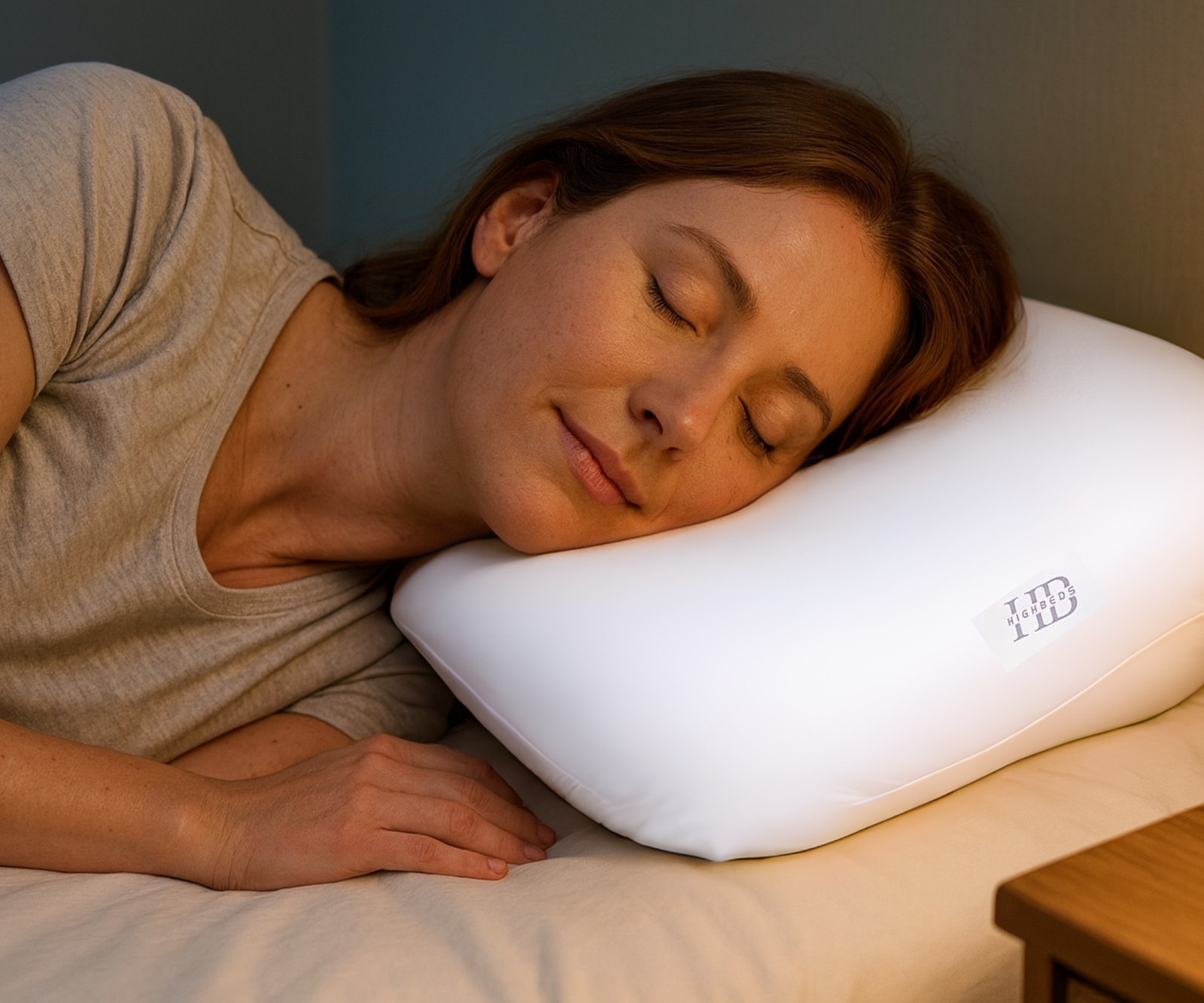
If you wake up with a stiff neck, tingling shoulders, or a dull headache that fades only after your first coffee, your pillow might be the culprit. A cervical neck pillow made of memory foam is designed to keep your head, neck, and spine aligned while you sleep—especially helpful for side sleepers who need extra support under the neck and between shoulder and mattress. Below is a clear, practical guide to what this pillow does, who it’s best for, and how to get the most from it.
What is a Cervical Memory Foam Pillow?
A cervical pillow has a contoured shape that cradles the natural curve of your neck. Instead of a one-height, fluffy rectangle, it typically features a gentle dip for the head and raised edges that support the neck. Memory foam responds to body heat and pressure, allowing the pillow to compress where needed and rebound as you move, so your neck stays supported all night.
Key Benefits at a Glance
- Neutral spinal alignment: Helps reduce strain on cervical vertebrae and muscles.
- Targeted neck support: Raised sides keep your neck level with your spine when side sleeping.
- Pressure relief: Memory foam distributes weight to ease pressure points.
- Motion stability: Foam core minimizes bounce, so changes in position don’t jolt you awake.
- Consistent shape: Unlike down or polyfill, it won’t bunch up or go flat by morning.
Note: Pillows can ease everyday discomfort from poor sleep posture, but they don’t treat medical conditions. If pain persists, consult a healthcare professional.
Who Is This Pillow Best For?
- Side sleepers who need a higher “loft” to fill the space between shoulder and head.
- Back sleepers who want the neck gently lifted while the head rests in a shallow cradle.
- People with desk/phone neck who feel tightness after long hours of sitting.
- Light to medium snorers who benefit from improved head/neck alignment (not a medical device, but better posture can help).
If you primarily sleep on your stomach, a tall contoured pillow may feel too high. Stomach sleepers usually do better with a thin, soft pillow—or gradually training toward side/back sleeping to reduce neck rotation.
Features to Look For
- Ergonomic Contour
Choose a design with asymmetrical heights (e.g., one side slightly higher). This lets you flip the pillow to match your neck length and shoulder width. - Adaptive Memory Foam
Mid-density (about 45–60D if specified) balances support and plushness. Too soft, and your head sinks; too firm, and you may feel pressure on the jaw or ear. - Breathable, Washable Cover
A removable, zippered cover—preferably bamboo-derived or a breathable knit—helps wick heat and is easy to launder. Look for OEKO-TEX® or similar fabric safety labels if available. - Ventilation & Heat Management
Perforated foam cores or airflow channels reduce heat build-up. If you sleep hot, prioritize this. - Size & Loft Options
Standard sizes work for most. Broader shoulders may prefer a higher loft (11–12 cm+ on the high edge), while petite frames often like lower loft (9–10 cm on the high edge). - Non-Slip Base
A grippy base fabric stops the pillow from creeping across smooth sheets—handy for restless sleepers.
How to Choose the Right Loft (Height)
- Measure shoulder depth: Stand against a wall and measure from the outer shoulder to the base of your neck. If it’s above ~12–13 cm, pick a higher-loft option; below ~10–11 cm, a lower loft may feel better.
- Mattress firmness matters: Softer mattresses let your shoulder sink, reducing the gap to fill; firmer mattresses need a taller pillow.
- Ear/shoulder comfort test: Lying on your side, your nose should point straight ahead (not angled up or down). If your ear feels squashed, the pillow is too high or too firm; if your neck feels “hanging,” it’s too low.
Setup & Break-In Tips
- Let it expand: Memory foam often ships compressed. Unbox and air it for 24–48 hours to reach full shape and off-gas any new-foam scent.
- Use a breathable pillowcase: Avoid heavy, non-stretch cases that fight the contour.
- Give it a week: Your neck muscles need time to adapt to healthier alignment. Minor soreness the first nights can be normal.
Care & Maintenance
- Do not machine wash the foam core. Spot clean only and air dry thoroughly.
- Wash the outer cover regularly (check label).
- Rotate occasionally (head-to-foot or flip) to promote even wear.
- Replace every 18–36 months or sooner if the foam no longer rebounds.
Frequently Asked Questions
Q: Will a cervical pillow eliminate neck pain?
A: It can reduce posture-related discomfort by keeping your spine aligned, but persistent pain has many causes. Use it alongside good habits: ergonomic desk setup, gentle stretching, and regular movement.
Q: Is it too firm for side sleeping?
A: Quality memory foam feels supportive yet cushioned. If your ear gets sore, try the lower-loft side, a softer case, or a pillow with ventilation cuts.
Q: Can I use it if I switch positions at night?
A: Yes. The central cradle suits back sleeping, while the raised edges support side sleeping. If you spend long periods on your stomach, consider a thinner pillow for those moments.
Q: Does it sleep hot?
A: Traditional memory foam can retain heat, but ventilated cores and breathable covers help. Pair with moisture-wicking pillowcases and bedding.
Pros & Cons
Pros
- Promotes healthy neck alignment for side/back sleepers
- Relieves common pressure points
- Shape holds through the night (no constant fluffing)
- Often includes a removable, washable cover
Cons
- Not ideal for dedicated stomach sleepers
- Some initial foam odor (dissipates with airing)
- Heavier than down/polyfill; less squishable for travel
Who Will Love It
- Side sleepers who wake with tight traps or tingling shoulders
- Back sleepers wanting gentle neck lift without a rigid feel
- Anyone replacing a flat, lumpy pillow and seeking consistent support
Final Thoughts
The Highbeds Ergonomic Cervical Memory Foam Pillow is a simple upgrade with outsized impact: better alignment, fewer midnight adjustments, and a calmer wake-up. Choose a contour height that matches your shoulder width and mattress firmness, look for breathable materials, and give yourself a short break-in period. Your neck will thank you.
As an Amazon Associate I earn from qualifying purchases, at no extra cost to you.